
Wise Men Still Seek Him

The Christmas story, the story of Christ’s birth and early childhood, will be on the minds of many over the next few weeks. Most of us are more familiar with the Christmas story than we are with any other story in the whole Bible — Mary discovering that she was with child, though she was a virgin; Mary and Joseph traveling to Bethlehem, yet finding no room in the inn; Jesus born in a barn and laid in a manger; the angelic announcement to the shepherds in the fields of Bethlehem, prompting them to visit the newborn King; the visit of the magi, the wise men, from the east; and the attempt of king Herod to kill Jesus, causing Joseph, Mary, and Jesus to flee to Egypt until after Herod’s death. And we all bring away certain feel-good lessons and reminders from the story — like the importance of family, that God still surprises, and love and generosity are good. But for the next few weeks, as we approach Christmas, I’d like to take the opportunity — since we’ll be thinking about the story anyway — to point out some lessons from the story that are less often noted. The first one being “Wise Men Still Seek Him”.

The wise men part of the Christmas story is found starting in Matthew 2:1. In the original story, these are more than just “wise men”, they are magi. The magi were an elite class of ancient astrologers (precursors to astronomy), philosophers, scientists, diviners, and general collectors of knowledge originally from the region of Chaldea. They were widely known and respected in the ancient middle east for their knowledge, insight, and intellect. Daniel was one of them in his day — in fact he was the chief of the magi (Daniel 2:48 / 4:9 / 5:11). But why are these mostly Gentile intellectuals mentioned in the Christmas story?

The likely answer has partially to do with Daniel, who was chief of the magi for decades, and who was apparently quite celebrated as a wise man in his day. This celebrated Jewish wise man and prophet  left behind some prophecies that we know in the Bible as the book of Daniel. And since he wrote prophetically for both the Jewish people and even Gentile kings (Nebuchadnezzar, Belshazzar, and Darius), it is quite likely that he wrote other things for his fellow magi — including something about a great King of the Jews, who would be worthy of worship, gifts, and a long trip from Chaldea to Bethlehem. The appearance of the magi in the story of Jesus’ birth is significant to Jewish readers, Matthew’s original audience, because of the Daniel connection. These magi, after reading and studying the writings from high-ranking, magi chief Daniel, saw the predicted sign in the night sky and came from far-away Chaldea (southern Iraq).

The other part of the significance of the magi coming from afar likely comes from the many prophecies in Isaiah that speak of even far-off nations streaming to the Messiah and His kingdom. We can read, for example, “Then in that day The nations will resort to the root of Jesse, Who will stand as a signal for the peoples; And His resting place will be glorious” (Isaiah 11:10 ). And the fact that they were the intellectual cream of the world who had come to seek Him makes the point of fulfilled prophecy even more compelling.

And wise men still seek Him. Now, it would seem that the recognized wise men of our age have no interest in seeking for Jesus. The Humanist philosophy, fueled by “scientism” (something different than true science), has gained the upper hand in our age, and many of our celebrated intellectuals have “toed the line” of atheism, the shibboleth of the “cool kids”. But there continue to be wise men of every nation who seek meaning, purpose, real life, and spiritual truth. And in their seeking, they recognize the signs of fulfilled prophecy, of the “ring of truth” to Jesus’ teachings, and the rock solid testimony of the resurrection of Jesus — the ultimate proof of His identity as the Son of God.

These are seldom wise men by the “celebrity standard” — I was reading an online news article today on Einstein’s brain, and one reader’s comment questioned Einstein’s real intelligence on the basis of his steadfast belief in God; I thought, “Really?!” But they are wise in seeking the spiritual over the material, the eternal over the temporary, Jesus over the wisdom of men. They are wise in seeking hope, not in this temporary and decaying world, but in the glorious and eternal world to come — available in Jesus. They are wise to recognize their human failings and inability to gain a righteousness of their own and to seek forgiveness and righteousness in Christ.

Paul summed it up so well (being inspired by God), when he said,

“Where is the wise man? Where is the scribe? Where is the debater of this age? Has not God made foolish the wisdom of the world? (1 Corinthians 1:20)…Yet we do speak wisdom among those who are mature; a wisdom, however, not of this age nor of the rulers of this age, who are passing away; but we speak God’s wisdom in a mystery, the hidden wisdom which God predestined before the ages to our glory (1 Corinthians 2:6, 7).”

Indeed, wise men still seek Him. What are you seeking?

Posted in Bible commentary, Christianity, New Testament | Tagged , , , , , , , , , , , , , , , , , , , , , , | Leave a comment

The Christian and Trials

“I don’t get it.”

Jesus never promised us an easy discipleship. On the contrary, He was quite truthful about the difficulty that would accompany anyone following Him. Yet, there always seems to be a human part of us that expects things to go better than they actually do, and we get disappointed. For a few moments, let’s remind ourselves of a few important things about the difficulties that face the Christian.

Did Jesus Promise a “Rose Garden”?

No, not at all. Instead He was very truthful about the persecution that would follow His followers.

  • All men will hate you because of me, but he who stands firm to the end will be saved. (Mark 13:13, NIV — see also Matthew 24:9-13; Matthew 10:24-28; and John 15:18-20).

Moreover, as long as we live in this fallen world, we will continue to be subject to the disease, destruction, death, and other calamities that befall the entirety of nature. Rescue from these things are not promised for the here and now, but for Heaven.

The natural question in response to these realities is why? Although there is no single or simple answer to this question, let me try to offer a few possibilities of why bad things may be happening to you.

We Have Met the Enemy and It is Us

First, some bad things happen because of mankind’s sin itself — we ourselves are often the problem. We love free will, when we get to exercise it; but we hate it when someone exercises it against us in the form of sin. Persecution is clearly one of these things, coming directly from mankind’s rebellion against God. Satan delights in using those who are serving him in sin (e.g., murder, theft, oppression, persecution, etc.), and then delights even more as he points an accusing finger through men at God! What a terrible injustice that God should receive the blame for things going wrong — and how typical of the enemy! But to eliminate the bad things that men do to us , God would also have to eliminate free will, our ability to make a free choice — a marvelous gift God will not take away from us. So, though worldly men will often blame God for the consequences of their own sin, may we never do so.

A Fallen World

Secondly, we live in a fallen world full of death, disease, defects, war, destruction, storms, and want. It is the consequence of the first sin. See Genesis 3 for the full story. And it won’t get better until Jesus comes again with the “restoration” (Acts 3:21), Heaven. Until then, we must deal with the world as we have it, like the rest of the world.

Some Things Are Best Learned by Doing

Third, God allows some difficult things to happen to us to strengthen or teach us something important. Even earthly parents who love their children often allow their children to suffer the consequences of their mistakes or irresponsibility — to teach. They give them chores to do with ever increasing  difficulty to teach, strengthen, and build character. Why wouldn’t a loving Heavenly Father do the same?

Good People?

Lastly, if we may be so bold, let’s ask, “Where are all these good people?”  Jeremiah challenges our sometimes distorted view of ourselves and says, “Why should any living man complain when punished for his sins? Let us examine our ways and test them, and let us return to the LORD.” (Lamentations 3:39-40, NIV). Considering how all of us have sinned against God and one another— and even the best of us have — should we really complain? Technically, the only truly good people among us are innocent children. Indeed, the better question truly is, “Why do such good things happen to such frequently bad people?”

Even if this posting were go on for thousands or hundreds of thousands of more words not every possible explanation could be listed. The whole question is an extremely complex one, and there is no simple or easy reason for suffering and evil. When one day we are able survey the whole scope of God’s work; this truth will become crystal clear, and all questions and doubts of this world will be laid completely and utterly to rest. What will be clearer still is why God had counseled all along that we “Trust in the LORD with all your heart and lean not on your own understanding” (Proverbs 3:5, NIV).

Posted in Bible commentary, Christian Leadership, Christianity, New Testament | Tagged , , , , , , , , , , , , , , , , , , , , , , , , | Leave a comment

The Pattern of God — The Pattern of Personal Growth, part 3

Personal spiritual growth is a goal for every serious Christian. Moreover, it is an expectation of God (e.g., Hebrew 5:11—6:3). But it’s not obtained by just any ol’ way. Although there have been numerous spiritual growth suggestions made over the last 20 centuries — some including ascetic paths, others including techniques from foreign religions — the most effective pattern is the one found in the Bible in Acts 2:42ff. We’ve already looked at how they devoted themselves to 1) the apostles’ teachings, 2) fellowship, and 3) worship; and I hope that you’ve possibly 1) obtained a Bible reading schedule to follow, 2)  made an effort at making good friends of your Christian brothers and sisters, and 3) made every attempt to be regular and faithful to all of the church’s assemblies. Do these things are you’ll be well on your way.

But the pattern found in Acts isn’t quite complete yet; today we’ll consider the last two found in this section of God’s word, prayer and involvement.

Prayer

We all recognize how important talking and communicating is to a relationship. When there is little or no talking done, there is little or no relationship. God has been very communicative — someone has counted 774,746 words in the Bible, 3/4 of a million words! All of them deep with meaning for anyone willing to give them more than a superficial reading. But what of our end of the conversation? How often do we hold up our end of the relationship/conversation? That is exactly what prayer is, our end of a conversation with God. Paul urged, (Philippians 4:6) “Be anxious for nothing, but in everything by prayer and supplication with thanksgiving let your requests be made known to God.” Peter encourages us to be (1 Peter 5:7) “casting all your anxiety on Him, because He cares for you.” And the young church in Thessalonica was urged, (1 Thessalonians 5:17) “pray without ceasing.”

Such prayer 1) draws us closer to God (that’s the natural effect of talking in humans), 2) strengthens our faith (as we ask and God answers), and 3) actually helps us to see things differently, spiritually, as we talk them over with the Lord. And yet, sadly, it is often a rather neglected means to spiritual development; too many things get in the way and preempt our good intentions. Don’t neglect this crucial part of the pattern of growth. I like one response I heard of, when someone commented that they were too busy to pray — “No, we’re too busy not to pray.” Have you set aside time to pray today?

Involvement

The Scripture notes in Acts 2 that the obedient believers in Jesus didn’t merely refrain from doing bad things — they got involved in doing the good things that God had commanded. The majority of the involvement seems to have been focused on taking care of the many new brothers and sisters in Jerusalem who had come from far away to Passover/Pentecost, had been converted, and now were staying around to learn more about Jesus. And these new Christians grew from from their good deeds and involvement! They grew enough to feed the needy for what seems to be weeks or months, causing some to sell their properties to sustain this help to the needy; enough to steadfastly endure persecution, when it came; and enough to share the Gospel everywhere they went, when persecution drove them out of Jerusalem.

Yes, involvement is certainly a strong, if often overlooked, means to spiritual growth; but you may ask, “How does it grow us?” There is a psychological principle that God knew about long before psychology discovered it: whatever I willingly get busy doing, I will deepen my convictions and feelings about. The connection between deeds and faith is so great that James said, James 2:26 “For just as the body without the spirit is dead, so also faith without works is dead.” Involvement, then, is a special path to “the renewing of your mind” (Romans 12:1,2). The more involved we get in obeying the positive commands (e.g., helping, serving, uplifting, worshipping, reading the Bible, enduring persecution with courage, sharing the good news, inviting others to church, giving, or showing compassion) the deeper our faith and conviction and maturity and love and righteousness and virtue grows (see 2 Peter 1:5-11). And one more great bonus to the doing of good things is that the more we are involved in doing good deeds, the less time we have to do the sinful ones! Christians serious about spiritual growth will get involved. Are you serious?

So, here’s the pattern of biblical spiritual growth found in Acts 2:42ff: devotion to 1) the apostles’ teachings, 2) fellowship, 3) worship, 4) prayer, and 5) involvement. It’s not mystical, gnostic, esoteric, ascetic, or beyond reach; it has been practiced successfully by centuries of faithful Christians; and it will build your faith today.

“Well,” someone might reply, “I’ve done those things, from time to time, but I just don’t feel like I’ve grown.” My response, “The key is the devotion part.” It is outright stated in the Acts 2:42ff passage — they devoted themselves to these things. Peter (2 Peter 1:5) begins his encouragement about spiritual growth by emphasizing the application of diligence to the areas of growth he lists later. The question, therefore, is not whether this pattern for spiritual growth really promotes spiritual growth — it does. The question really is whether you are really practicing the pattern for spiritual growth — “How devoted will you be to your own spiritual growth?”

Follow the pattern diligently and watch what happens.

Posted in Bible commentary, Christian Leadership, Christianity, New Testament | Tagged , , , , , , , , , , , , , , , , , , , , , , , , , , , , , | 1 Comment

The Pattern of God— The Pattern of Personal Growth, Part 2

Though we sometimes think of spiritual growth as being a personal journey, different for every individual, the Scripture tells us that there actually are certain things that universally promote the spiritual growth of the Christian — call them patterns. Last week we observed what the very earliest Christians did. After being baptized on the day of Pentecost…

Acts 2:42-47 “They were continually devoting themselves to the apostles’ teaching and to fellowship, to the breaking of bread and to prayer. Everyone kept feeling a sense of awe; and many wonders and signs were taking place through the apostles. And all those who had believed were together and had all things in common; and they began selling their property and possessions and were sharing them with all, as anyone might have need. Day by day continuing with one mind in the temple, and breaking bread from house to house, they were taking their meals together with gladness and sincerity of heart, praising God and having favor with all the people. And the Lord was adding to their number day by day those who were being saved.”

Last week we looked at the portion of the growth pattern in which these early Christians devoted themselves to the apostles’ teachings, and how growing Christians still do so by staying in the New Testament Scriptures. But there is more that serious disciples have always been devoted to (as Acts 2 shows us) and will always want to devote themselves to in pursuit of spiritual growth. Today we’ll look at Fellowship and worship with the assembly of the saints.

Fellowship

Spiritual growth is not and never has been a solitary thing. For some this is sort of counter-intuitive, after all, “Isn’t spiritual growth all about what goes on privately inside of the individual?” While spiritual growth is indeed about what happens in the heart, one of the ways that it happens in the individual is in the fellowship of the church — with others.

The truth is that we a great deal of our time in secular pursuits — just do the math:

  • How many hours a week do you usually spend at work?
  • How many hours do you usually spend with non-Christian friends and/or family?
  • How many hours a week do you usually spend in secular (non-religious) entertainment?
  • How many hours a week do you spend at worship or with Christian friends?
  • What is the ratio of time “in the world” vs. time with positive Christian values?

Now, take that ratio and think. What sort of influence does the world try to exert on us daily or weekly (priorities, language, “fun”, moral boundaries, attitudes, etc.)? Conversely, what do the Christian people and influences try to encourage us to do? So, is Christian fellowship important? Paul warned the Corinthians, (1 Corinthians 15:33) “Do not be deceived: “Bad company corrupts good morals.” The truth is that Christians with several friends within the church with whom they spend time are 1) more likely to grow and 2) not as likely to fall away.

Worshiping with the church

A common mistake that many modern religious people make is to think that the worship assembly is really not that important. But personal, private worship at home in isolation from other Christians is just not enough to grow spiritually (or please God). The growing Christians of Acts 2 devoted themselves to “the breaking of bread…praising God…” How does assembled worship help us to grow? When we partake of the Lord’s Supper we together remember the Lord’s death for us and that we have been made both sons of God by covenant and the visible body of Christ (the church) — both having responsibilities toward others. The singing of the congregation (Col. 3:16) teaches and admonishes us all in ways that we cannot do on our own. The Scripture tells us (Acts 4:31) that there is special power in corporate prayer (prayer offered together as a church). Preaching in the assembly from God’s word provides us all with a little reality check regarding our beliefs, our words, our deeds, our attitudes, and our spiritual growth. And even giving together allows us to do much more than we could do alone. Add to this the fact that we are commanded to do so (Heb. 10:23-25) and it becomes clear that it is much more important than modern folks believe. You see, it’s not so much that stronger Christians go to all the worship services and Bible studies of the church as much as it is that Christians that go to all the worship services and Bible studies of the church become stronger.

Follow these patterns and watch how you grow! Next week we’ll talk about prayer and involvement.

Posted in Bible commentary, Christian Leadership, Christianity, New Testament | Tagged , , , , , , , , , , , , , , , , , , , , , | Leave a comment

The Pattern of God— The Pattern of Personal Growth, Part 1

Although we might not be initially inclined to think of spiritual growth as a pattern, there is a definite expectation in Scripture that that everyone who becomes a Christian will grow spiritually. Just as in the physical realm, when a child is born into this world, there are certain growth expectation, goals, and milestones that parents look for in healthy children; so also God looks for growth in His children.

We are born into the family of God. Jesus said, (John 3:3-5) “…Truly, truly, I say to you, unless one is born again he cannot see the kingdom of God.…Truly, truly, I say to you, unless one is born of water and the Spirit he cannot enter into the kingdom of God.” We all therefore start off as “infants in Christ” (1 Cor. 3:1) and immature. This is important for every new Christian and older Christian to know and remember — the knowledge, understanding, and faith of a new Christian doesn’t begin full-grown; it should expected that it will start small (like the mustard seed) and grow. The apostle Peter wrote (1 Peter 2:1, 2) “Therefore, putting aside all malice and all deceit and hypocrisy and envy and all slander, like newborn babies, long for the pure milk of the word, so that by it you may grow in respect to salvation.”

That being said, however, staying immature is not expected, and immaturity is viewed by God with alarm. The writer of Hebrews wagged a finger of rebuke at some of those he was addressing telling them, (Hebrews 5:11-14) “Concerning him we have much to say, and it is hard to explain, since you have become dull of hearing. For though by this time you ought to be teachers, you have need again for someone to teach you the elementary principles of the oracles of God, and you have come to need milk and not solid food. For everyone who partakes only of milk is not accustomed to the word of righteousness, for he is an infant. But solid food is for the mature, who because of practice have their senses trained to discern good and evil.” Peter gave to his readers a whole list of things that they needed to grow in throughout their lives in 2 Peter 1:5-11. And the apostle Paul even pointed out God’s provision in the church to help the church to grow spiritually — Ephesians 4:11, 12 “And He gave some as apostles, and some as prophets, and some as evangelists, and some as pastors and teachers, for the equipping of the saints for the work of service, to the building up of the body of Christ.”

But much to the frustration of some disciples of Christ, the maturity process sometimes takes a little while, too long for the impatient. This is to be expected. Children don’t grow up overnight, even though they’d like to. And the same could be said for professional athletes — it takes years. How do children and professional athletes reach their full stature, maturity, and skills? They do the things that promote growth, maturity, strength, and skill. So also with mature Christianity.

What are those things that lead to mature Christianity? We probably need to look no farther than Acts 2:42-47 for the essence of it, where we see some 3000 new Christians shepherded and guided by the inspired apostles in their spiritual growth:

“They were continually devoting themselves to the apostles’ teaching and to fellowship, to the breaking of bread and to prayer. Everyone kept feeling a sense of awe; and many wonders and signs were taking place through the apostles. And all those who had believed were together and had all things in common; and they began selling their property and possessions and were sharing them with all, as anyone might have need. Day by day continuing with one mind in the temple, and breaking bread from house to house, they were taking their meals together with gladness and sincerity of heart, praising God and having favor with all the people. And the Lord was adding to their number day by day those who were being saved.”

Please notice that they devoted themselves 1) to the apostles’ teaching, 2) to the fellowship, 3) to “the breaking of bread”, 4) to prayer, and 5) to sharing. Let’s look at these things individually to learn more about them.

They devoted themselves to the apostles teachings
Since we don’t have any living apostles to teach us, we might think this to be something that we cannot do; but actually the New Testament was itself largely composed by some of the apostles — Matthew, John, Paul, and Peter. To these and the other apostles Jesus commanded, (Matthew 28:20) “teaching [My disciples] to observe all that I commanded you; and lo, I am with you always, even to the end of the age.” So as we read the New Testament we are actually reading the apostles teachings. Why is this important to spiritual growth? These teachings are about how Jesus Himself lived, what He taught, and what He did (see the Gospels). They help us to seek spiritual wisdom and see the unseen (e.g., 1 Cor. 1-4). Moreover, their words, being inspired by the Holy Spirit (John 16:13) guide us “into all the truth”.

Such teachings are described as our nourishment, milk to the baby — (1 Peter 2:1-3 ) “Therefore, putting aside all malice and all deceit and hypocrisy and envy and all slander, like newborn babies, long for the pure milk of the word, so that by it you may grow in respect to salvation, if you have tasted the kindness of the Lord.” And even beyond the metaphor of milk, these teachings are characterized as the kinds of guidance that children need — 2 Timothy 3:16, 17 “All Scripture is inspired by God and profitable for teaching, for reproof, for correction, for training in righteousness; so that the man of God may be adequate, equipped for every good work.” Using the metaphor of raising a child or coaching an athlete, you could say that devotion to the apostles’ teachings would fall into the feeding and training categories — essential for growth, development, and strengthening.

Next time we’ll talk about fellowship and “the breaking of bread” as part of the pattern for spiritual growth.

Posted in Bible commentary, Christian Leadership, Christianity, New Testament | Tagged , , , , , , , , , , , , , , , , , , | Leave a comment

The Pattern of God — Walking According to the Pattern

Over the past several weeks we’ve been talking about the pattern of the church, the bride of Christ. We’ve noted that there is a pattern for the head of the church, a pattern for becoming a Christian and part of His church, a pattern for the organization of the church, and a pattern for worship. But there is also a pattern for the church’s behavior, the moral pattern by which its members “walk”. Let’s then take a brief look at the pattern of the church’s moral life.

Love the Lord
At the beginning of every synagogue service the Jewish congregation that gathers recites what is known as the “Shema” — Deuteronomy 6:4, 5 “Hear, O Israel! The LORD is our God, the LORD is one! You shall love the LORD your God with all your heart and with all your soul and with all your might.”. It is sometimes considered to be the essential creed of Judaism, but it is more; it is an eternal principle and essential guide to morality in every age. But the love that is commanded here is more than merely a warm, sentimental feeling toward God. It is a love that demands something of us, obedience — John 14:15 “If you love Me, you will keep My commandments,” and 1 John 5:3 “For this is the love of God, that we keep His commandments; and His commandments are not burdensome.”

Jesus Himself
Another fundamental moral principle that one may see in both Old and New Testaments is “You shall be holy, for I am holy” (e.g., Lev. 11:45 and 1 Pet 1:16). But the problem for men often was not knowing how to go from the abstract commands and acts of God to the  practical moral choices of daily life. In the spirit of “be holy, for I am holy”, Jesus became the Word — the Word made flesh that could be seen, touched, and heard (John 1:14 and 1 John 1:1-3) — and made this principle truly accessible. For example, part of Jesus’ Great Commission is that disciples be made. Disciples are students, learners, those that follow in the footsteps of Jesus — the ultimate pattern. We are, in fact, told (1 John 2:6) “the one who says he abides in Him ought himself to walk in the same manner as He walked.” Integral to discipleship is to see Jesus as “the pattern” — act like Him; speak like Him; and think like Him.

Be careful of your heart
Following Jesus will certainly include all the moral commands of the Bible, but sometimes as humans, it becomes easy for us to focus only on what we do with our bodies and words and discount what goes on in our hearts and minds. Jesus, however, tells us that we must also be careful of what our thoughts dwell on. The moral teachings of Matthew 5:21-48 emphasize not only the external deeds, but thoughts of the heart like lust, hate, and covetousness. Jesus, in Luke 6:45, warns us that what thoughts we harbor in our hearts will eventually come out. And Paul tells us that transformation springs from the “renewal of the mind” (Romans 12:2).

And more specifically…
There are other principles to this pattern of moral behavior, too — things we are specifically told not to do. Clear lists of things that we are specifically told to avoid can be found in places like Galatians 5:19-22, Romans 1:18-30, 1 Corinthians 6:9-11, and 1 John 2:15-17. They would include commands against lying, stealing, murdering, the many forms of sexual sin, disobedience to God-appointed authority, idolatry, witchcraft, gossip, greed, divisiveness, drunkenness, and much more. They are deeds that, given our modern society’s persistent denial of sin as sin, we’d all do well to review from time to time, just as a reminder of what really is sinful and what is not.

And more positively…
But avoiding sinful behavior is not the sum total of morality. I mention this, because it is common for modern people to define morality by what they don’t do — “I’m a good person; I don’t steal or beat my wife, or do drugs.” For the sake of those who define their morality this way, it is important to point out that Jesus’ perfection was not merely “avoiding wrong”; it was much more about doing good and “fulfilling all righteousness” (Matthew 3:15). The New Testament, therefore, is filled with many, many encouragements to be involved in good deeds (e.g., Titus 2:14; 3:1; 3:8; 3:14), including lists of things that we should engaged in both as individuals and as churches. They include passages like Galatians 5:23-24, Ephesians 4:17—5:21, and 1 Corinthians 13:4-7.

In the form of…
So, God has given us a pattern for morality. It comes 1) in the form of commands (e.g., Matthew 28:20), 2) in Jesus’ example (see above), and even 3) in the righteous examples of Christian living we find within the church (e.g., Philippians 3:17 “Brethren, join in following my example, and observe those who walk according to the pattern you have in us.”).

There have always been some doubts and misunderstandings about moral living down through the centuries, and our own age is no different — sometimes even among Christians. But there’s no need for confusion. The principles are clear; the commands are plain; our example in Jesus makes application unmistakable; and the pattern does not vary because of calendars, changing social norms, or new philosophies.

Are you following the pattern?

Posted in Bible commentary, Christianity, New Testament | Tagged , , , , , , , , , , , , , , , , , , , , , , , , | Leave a comment

The Pattern of God — The Pattern of Worship, Part 3

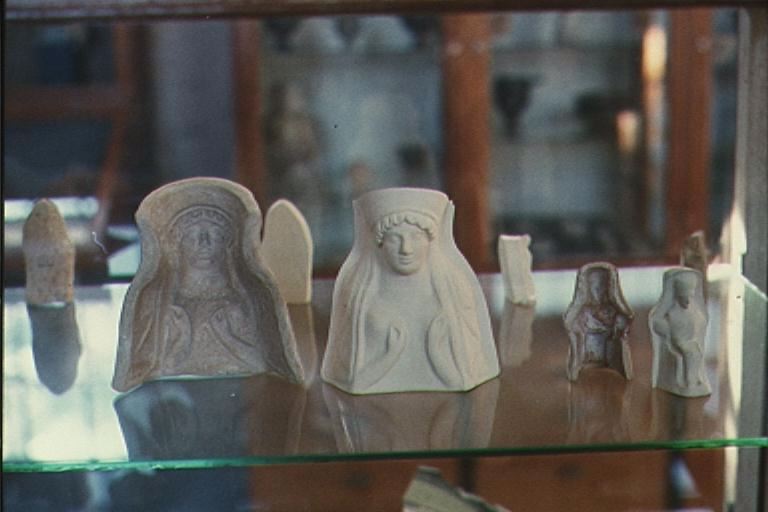
Ancient molds from Corinth illustrating the function of pouring oneself (or the church) into the mold of the New Testament

Over the past few weeks we’ve been talking about the patterns that God has given us with regard to the church and over the last couple of weeks the patterns regarding the church’s worship. Hopefully, it has become clear that God really has established His pattern in the New Testament. Passages like the following underscore for us the importance of patterns, standards, and examples in Christianity…

    • Romans 6:17 “…you became obedient from the heart to that form of teaching to which you were committed,”
    • Philippians 3:16 “…keep living by that same standard …”
    • Philippians 3:17 “…observe those who walk according to the pattern you have in us.”
    • 2 Thessalonians 3:7 “…follow our example,…”
    • 1 Timothy 4:12 “…in speech, conduct, love, faith and purity, show yourself an example …”
    • 2 Timothy 1:13 “Retain the standard of sound words…”
    • Titus 2:7 “…show yourself to be an example of good deeds, with purity in doctrine, dignified,”
    • 1 Peter 2:21 “… leaving you an example for you to follow in [Jesus’] steps,”

Last time we considered the pattern of worship for the Lord’s Supper and singing. But there are three more acts of worship that are part of the Lord’s pattern that we should know about.

Preaching
A consistent part of the worship of the church as revealed in the New Testament includes the preaching of God’s word. In Acts 20:7 as the church in Troas met together on the first day of the week, Paul preached until midnight. In Corinth (1 Cor. 14) it is clear that preaching in the form of “revelation or of knowledge or of prophecy or of teaching” (v. 6). It would even appear that the book of Hebrews is actually a sermon, being called a “word of exhortation” (Heb. 13:22). Although the length of the message, the style of the message, the logic or passion of the message, and the illustrations, parables, metaphors, or allegories may vary; the pattern from the preacher must remain the same — it must be the truth of God’s word, the whole counsel of God. And for the listener the pattern is also important and could be summarized in Acts 17:11 “Now these were more noble-minded than those in Thessalonica, for they received the word with great eagerness, examining the Scriptures daily to see whether these things were so.” So, the pattern is that the preaching must be the truth of God’s word, and it must be received by the church eagerly, with examination of the Scriptures preached upon.

Giving
In 1 Corinthians 16:1, 2 the inspired apostle Paul writes “Now concerning the collection for the saints, as I directed the churches of Galatia, so do you also. On the first day of every week each one of you is to put aside and save, as he may prosper, so that no collections be made when I come.” Financial giving is to be done, then, every first day of the week, proportionally as one is prospered. In the Old Testament, the pattern for the appropriate amount was a tithe (a tenth) of one’s holdings; but throughout the New Testament and especially in 2 Cor. 8,9 the appropriate amount is better than a certain percentage, the standard is simply “generosity”. As we give together to the Lord we provide for and participate in feeding the hungry, clothing the cold, teaching the children, supporting the full-time workers of the church, maintaining a building in which to meet and teach and worship etc., and helping with the costs of reaching out into the community with things like Gospel meetings and brochures and Give-Away-Days.

Praying
Although prayer is something that should often be done privately by the Christian, it should also be noted that the first century church was a praying church (e.g,. Acts 1:12-14; Acts 4:23-31; 1 Tim. 2:1-8) and that it is part of the worship pattern of God’s people, when they gather together. There is power in “corporate” prayer:

Matthew 18:19, 20 “Again I say to you, that if two of you agree on earth about anything that they may ask, it shall be done for them by My Father who is in heaven. For where two or three have gathered together in My name, I am there in their midst.”

Acts 4:31 “And when they had prayed, the place where they had gathered together was shaken, and they were all filled with the Holy Spirit and began to speak the word of God with boldness.”

Together we can offer our thanks and praise in prayer, present our petitions about both our physical and spiritual needs, confess our sins, ask for forgiveness, pray for the sick, ask for strength and boldness, and even more.

Together these five acts of worship, offered in spirit and in truth are most pleasing to God. They don’t need to be offered by practiced professionals to be pleasing; but done according to God’s pattern with the whole heart they find favor in the eyes of the Lord. Let us always offer to God the worship HE wants.

Posted in Bible commentary, Christian Leadership, Christianity, New Testament | Tagged , , , , , , , , , , , , , , , , , , , , , , | Leave a comment

The Pattern of God, The Pattern of Worship, part 2

Last time we talked about the more general patterns of worship found in the New Testament: location doesn’t matter now, it must be in spirit and truth, it must be a reflection of daily life, it must be God-oriented, it is a together sort of thing, it should be done for edification, men should lead, it should be done decently and in order, and it must originate with the New Testament. Altogether there are 5 specific acts of worship that are listed in the New Testament as happening in the assembly — preaching, giving, singing, praying, and communion. In this article we’ll be looking at two, communion and singing. We’ll take a look at the remain specific patterns next time.

Singing
The New Testament talks about singing as worship a number of times. For example, we read in Paul writing to the church in Corinth, 1 Corinthians 14:15 “…I will sing with the spirit and I will sing with the mind also,” and there are others (Matt. 26:30; Acts 16:25; Eph. 5:19; Col. 3:16; James 5:13).

But not just any song is appropriate; Paul tells us that the appropriate sort of songs needs to be psalms, hymns, and spiritual songs in both Eph. 5:19 and Col. 3:16. This may seem self evident, but it is not unusual in the modern era to occasionally hear “Dust in the Wind” or “Reach and Touch Somebody’s Hand”. Praise to the Lord in song needs to be more than a catchy tune (in the classic sense of American Bandstand’s standard: “I like the beat and it’s easy to dance to”). The songs need to build us up, need to praise God, thank Him, give us encouragement, and teach us right doctrine and right living.

And not just any kind of singing is appropriate; yes, it needs to be a cappella, without instrumental accompaniment. There are several strong reasons why; I’ll share two. 1) The Greek words in the New Testament mean a cappella singing. Both the Greek words ado and psallo carry the meaning of singing without accompaniment. Greek lexicons will show this convincingly, but one need only take a look at the practice of the Greek Orthodox Church, which reads the Greek text — a cappella. 2) The historical practice of the church from the 1st century through the 11th century was uniformly a cappella. Some Catholic churches began to use instruments about the 11th century, but even so it was universal. Protestant groups throughout Europe and American not only did not use instruments, but actually actively preached against it until approximately the mid-1800’s. Calvin, the Wesley’s, Luther, and others were adamantly opposed to them on biblical grounds. The proof of the ancient roots  of this sort of singing (founded on biblical premises and apostolic teaching) is the very meaning of the Latin phrase a cappella, “in the manner of the church”.

Communion
Also called the Lord’s Supper, it has always been a central part of the worship of the church. The pattern of this facet of Christian worship includes 1) that it happen on the first day of the week (Acts 20:7); 2) that it be done in assembly with others (Acts 20:7 and 1 Cor. 11:17-34); 3) that it include unleavened bread (Lk. 22:7-20; 1 Cor. 10:17; 1 Cor. 5:7,8; and 1 Cor. 11:24) representing and reminding us of both the physical body Jesus sacrificed on the cross and spiritual body of Christ (1 Cor. 10:17) of which we are all members; and 4) a cup of wine (fruit of the vine (Matt. 26:29) representing and reminding us of the new covenant (with God and our fellow disciples — the adopted children of God) inaugurated in His blood. And it must be done with true remembrance, seeing the spiritual realities that it symbolizes; this is the primary focus of Paul’s exhortation, (1 Corinthians 11:28) “But a man must examine himself, and in so doing he is to eat of the bread and drink of the cup.”

Worshipping God is an important and (when you think about it) awesome human act. We must never approach it too casually, unfocused, or too loosely. The pattern given us guides us into the sort of worship that not only glorifies God appropriately, but also builds us up the right way. Anything else is disobedience and puts the focus on men rather than the proper place — God.

Posted in Bible commentary, Christian Leadership, Christianity, New Testament | Tagged , , , , , , , , , , , , , , , , , , , , | Leave a comment

The Pattern of God, The General Pattern of Worship

In an earlier posting we talked about the “fingerprints” of the bride of Christ, the church, that helps us identify her clearly. We’ve spoken about the “fingerprint” pattern of the organization of the church, and for the next couple of articles, we’ll look at the church’s pattern of worship. For today let’s look at Christ’s bride’s general pattern of worship; next time we’ll look at her more specific worship patterns. For example…

“Where” doesn’t matter
From Moses’ time right up through the life of Jesus Himself, the place to worship God was really only one place, the Temple of Jerusalem (John 4:19-22). But starting with the beginning of the new covenant and the church, the “where” is simply anywhere other Christians (Christians according to the New Testament standard) are meeting:

John 4:21 “Jesus *said to her, ‘Woman, believe Me, an hour is coming when neither in this mountain nor in Jerusalem will you worship the Father.’”

Hebrews 10:24, 25 “and let us consider how to stimulate one another to love and good deeds, not forsaking our own assembling together, as is the habit of some, but encouraging one another; and all the more as you see the day drawing near.”

Church buildings and cathedrals simply aren’t necessary. A “temple” is formed anytime God’s people gather together in Jesus’ name (Ephesians 2:19-22 / 1 Corinthians 3:16,17), whether it is a private home, a meeting hall, or a catacomb.

“In spirit and in truth” does matter
If the Lord isn’t interested in the “where” anymore, we should note that He still continues to be interested in the the “how”; and the how is “in spirit and in truth” (John 4:23,24). In simpler language, God wants to see worship Him with our complete heart (in spirit) and worship that is done His way (in truth). It’s no longer about “true location”, but both true devotion and true obedience.

Worship needs to be a reflection of my daily life
To be acceptable to God, one’s worship must be a reflection of the rest of one’s life. In other words, we mustn’t live like a sinner and come to church expecting that God will accept us like a saint. Some of Jesus’ most stark criticisms were reserved for those who came to the Temple with long prayers, many sacrifices, and expensive gifts, but whose lives were sinful. In criticism of religious people who sinfully tried to separate Jesus from the lost folks who wanted to hear Him, Jesus declared, (Matthew 9:13) “But go and learn what this means: ‘I DESIRE COMPASSION, AND NOT SACRIFICE,’ for I did not come to call the righteous, but sinners.’”

Worship needs to be God-oriented, not about me
One of the great failures of much “worship” done in the name of the Lord is the popular trend to be worshipper oriented and the neglect to be God oriented. Jesus pointed this out in Matthew 6:1-15, when warned us against practicing righteous acts to be seen and applauded by men. It is the Lord who needs to be the object of worship, not men.

Christian worship should be done with other Christians
It is a mistake to think that one may worship God acceptably alone; the Scripture is pretty clear on this matter. Although one may certainly do some things that are done in a church setting, they are no substitute for the worship of the gathered church. Hebrews 10:25 (quoted above) directly corrects the error men often hold in their hearts, that it will be OK to skip the assembly of the church. Indeed, how can one really take communion by oneself? Or how can one (Ephesians 5:19) “[speak] to one another in psalms and hymns and spiritual songs, singing and making melody with your heart to the Lord” by oneself? You see, the fingerprint of worship was always intended to be a together thing.

Should be done for edification
The worship of God must always be primary in any worship service; we must please God first. But a secondary priority in the pattern must be in the building up of the church. Paul was very, very clear through repetition (1 Cor. 14:5,12,26) that worship has a very important “horizontal” responsibility. Thus, our singing should be “[speak] to one another in psalms and hymns…”, our fellowship should “stimulate one another to love and good deeds”, our prayers should be for one another (James 5:16), the teaching and preaching need to be for the edification of the church (1 Cor. 14:12), our giving needs to be a collection (1 Cor. 16:1,2), and our celebration of communion needs to encourage all (1 Cor. 11:17-34, esp. v. 33).

Men should lead
Although this part of the pattern of worship is often challenged, especially in modern times, the truth has always been that God has designated men as the spiritual leaders in the church and its worship (1 Cor. 14:34-36 and 1 Tim. 2:11,12). And this is not because the Scripture was written in a “male dominated society”; religious rites in the society all around the ancient church were quite “gender integrated” with both priests and priestesses. If ever there were a time for women to take an equal role with men in the church, it was the first two or three centuries AD; but that was not the teaching of Jesus or His apostles. The Lord’s pattern for worship is that men should lead in the church’s worship.

Worship needs to be done decently and in order (1 Cor. 14:40)
Worship to God must also be done, within the other parameters of the pattern, in a non-chaotic, orderly way (1 Cor. 14:40). The ancient church of Corinth was not doing this (see 1 Cor. 11-14), and some churches today are inclined to spontaneity, impulsivity, and uninhibited “worship” which often devolves quickly to chaos. This is not what the Lord has in mind; although there is room for some spontaneity, the overarching principle and pattern is decency and orderliness; “for God is not a God of confusion but of peace, as in all the churches of the saints” (1 Corinthians 14:33).

It must be a New Testament pattern
Not just any pattern out of the Bible, however, will do. There was a pattern of worship in the Old Testament: “…Moses was warned by God when he was about to erect the tabernacle; for, ‘SEE,’ He says, ‘THAT YOU MAKE all things ACCORDING TO THE PATTERN WHICH WAS SHOWN YOU ON THE MOUNTAIN’” (Hebrews 8:5). But Christians are under a new covenant: “When He said, “A new covenant,” He has made the first obsolete. But whatever is becoming obsolete and growing old is ready to disappear” (Hebrews 8:13). Animal sacrifice, Temple worship, instrumental music, burning of incense, etc. were all part of the old pattern. The new covenant has a new pattern — which is what we’ll look at next time.

Posted in Bible commentary, Christian Leadership, Christianity, New Testament | Tagged , , , , , , , , , , , , | Leave a comment

The Pattern of God — The Pattern and Identity of the Church

Last week we examined the truth that God has revealed and uses spiritual patterns that we should follow — as individuals and also as a church.

God’s people, have often been compared to a bride (e.g., Hosea 1-3 or Revelation 21:2), and consequently the church has often been called “the Bride of Christ”. Like any bride, the church has a specific identity, and indeed that identity makes a big difference to the Groom (just ask Jacob the morning he discovered that he had unintentionally married Leah! See Genesis 29:25.). And the church’s identity (her beauty, her purity, her nobility) is revealed in God’s pattern found in the Scriptures.

For example, Acts 2:47 tells us that the church is all those who are saved. Since there are so many who claim to be saved, we might initially think that this isn’t much of a mark of identity — until we consider what God’s pattern for being saved is. In Acts 2:36-42, we find the pattern of initial salvation plainly revealed: faith in Jesus (pierced to the heart about their unbelief, they then believed), repentance, and baptism (immersion in water) for forgiveness of sins. Tragically, large number of religious groups that carry the word “church” do not teach or practice baptism, an integral and essential part of the pattern. As When Paul wrote about baptism’s importance and effect in our lives, it is significant that he also added, “But thanks be to God that though you were slaves of sin, you became obedient from the heart to that form of teaching to which you were committed” (Romans 6:17 ). Any religious group lacking obedience to this form / pattern of teaching is clearly not the Lord’s church, but impostors. Like Cinderella’s glass slipper, baptism is an essential test; if a religious group’s “foot” (teachings and practice about salvation) doesn’t fit into this “glass slipper”, it is not the bride of Christ — because they are not saved.

Other patterns continue to identify the church; worship is one. Like God gave patterns of worship to the Israelites in Mosaic Law to be followed, so He has also given us some specific worship patterns to follow today…

  • in spirit and in truth (John 4:23,24)
  • the Lord’s Supper every first day of the week (Sunday, Acts 20:7),
  • singing of praise and encouragement (without instrumental accompaniment, Ephesians 5:19),
  • prayer (offered together in faith, sincerity, and purity in Jesus’ name; e.g., Acts 4:24-31),
  • a word of encouragement (from God’s word, Acts 20:7),
  • and giving (1 Cor. 16:1,2).

We’ll study these more closely in following bulletin articles, but these patterns of worship help us identify the church of the Lord, too.

The Lord has, likewise, given us a pattern for the organization of His church. It has no earthly headquarters, because he head of the church always was, is now, and always will be Jesus — for doctrine, example, guidance, wisdom, and leadership (Ephesians 1:22,23). The Lord’s Kingdom, the church, with Jesus as the Head and King, needs no additional governing apparatus than the pattern He has ordained. And that pattern is that each congregation is organized as a separate entity (Titus 1:5) with elders/shepherds/overseers pastoring the flock (Acts 20:17-35), and evangelists, deacons, teachers, and other members of Christ’s body following elders’ lead (1 Peter 5:3 & Hebrews 13:17) as they follow the Lord Himself (1 Corinthians 11:1).

Lastly, at least for this article, we should note that there is also a pattern of deeds found in the Scriptures for the genuine church of the Lord. This pattern includes a number of things that originate with true discipleship to Jesus and, through diligent attention to growth (2 Peter 3:5ff), include such things as morality (e.g., Ephesians 4: 17-32), love (e.g., 1 Corinthians 13), generosity (e.g., 2 Corinthians 8,9), and service (e.g., John 13:4-15). Without such deeds, Jesus ceases to recognize us as His (Revelation 2:5).

The unique patterns of a fingerprint will identify the person; magnifying glassand the unique patterns of obedience to the plan of salvation, the kind of worship offered, the church’s organization, and the church’s deeds — the church’s fingerprint, so to speak — will identify the Lord’s church, too.

Posted in Bible commentary, Christian Leadership, Christianity, New Testament | Tagged , , , , , , , , , , , , , , , , , , , , , | Leave a comment