Be a Bible reader — 1 Chronicles 5-8

Well, today we’re looking at yet more genealogy. That’s not to say that there aren’t some interesting things to note, of course, but I suspect that for many it might be a bit of “yawner”. So, what is interesting here?

We have, for example, a summary of the pecking order of the patriarchs — things that were implied in Genesis and other places, but stated plainly in 1 Chron. 5:1,2. Joseph had received the birthright “double-portion” — this is why there is an Ephraim and Manasseh among the tribes. But Judah (because of the scandal and shame of his older brothers’ actions — Simeon and Levi slaughtered the men of Shechem, and Reuben had sex with his father’s concubine) became the family ruler. The tribe of Ephraim tended to dispute this, by the way, expecting to be consulted on military matters (e.g., Judges 8:1; Judges 12:1), and it could be that this was the origin of the division between Israel and Judah — there seems to have been some friction between them long before the Rehoboam / Jeroboam split. But the inspired indications of leadership have consistently been that Judah was to hold the scepter (e.g., Gen. 49:8-10; Psa. 60:7; Psa. 108:8), which is the tribe from which Jesus came.

And one may wonder what the point of the genealogy is here. I’ll hazard an educated guess here — but please understand that this is “The Gospel According to Park”. Genealogy is largely under-appreciated by Americans. Yes, I know that there are genealogical organizations, software, and the entire Mormon Church that is big into it, but the average guy on the street is only barely aware of what or who his family was a couple of generations ago. The American psyche has been formed largely by being “The New World” mentality: a people without a pedigree (or “criminal record” in many cases), making history rather than reading about it, and lives too busy to pass on many family stories. But in other more “historied” places in the world family and genealogy is quite important and gives a sense of where the story you are telling fits in with their family history. The writer of Chronicles, as he was about to tell of the grand sweep of history of the Judahite kings, feels compelled to remind his readers that this is real history connected to people with whom they had familial ties.

But let me leave you today with an encouragement to be not only a daily reader of the Scripture, but an applier of it as well. You’ll hopefully remember the story in 1 Kings 22, when Ahab was trying to convince Jehoshaphat to join him in a military campaign against the Arameans. Ahab trotted out his favorite prophets to show that this military adventure would meet with success, but Jehoshaphat (apparently smelling a set-up) asked if there were any other prophets that they could consult with. Ahab’s response, you’ll remember, was that there was one more (a certain Micaiah), but that he didn’t like to consult with him because “… he does not prophesy good concerning me, but evil” (1 Kings 22:8, NAS95). You know, there’s a lot of folks who don’t like reading the Bible for that very same reason.

Someone (I wish I knew who to give credit to on this one) wrote in a bulletin article many years ago that in the spirit of warning labels that we often put on products that the Bible might stand a warning label of its own: “Warning, reading Scripture may be hazardous to your…”

  • arrogance
  • depression
  • self-centeredness
  • pride
  • lifestyle
  • doubts
  • ignorance
  • self-pity
  • hatred
  • divisiveness
  • thoughtlessness
  • bigotry
  • haughtiness
  • lusts
  • unbelief

If you’re interested in keeping some of these in your life, don’t read the Scripture. But if you’re serious about your discipleship, there could be no greater “disinfectant” than the Lord’s own word, the Bible.  Keep reading!!

See you tomorrow, Lord willing.

Posted in Bible commentary, Christianity, Old Testament | Tagged , | Leave a comment

Chronicles, a focused view on Judah — 1 Chronicles 1-4

Today we begin a new book, the first book of the Chronicles. The first few chapters are largely genealogies and fragments of genealogies. You might be excused from reading every syllable, since many of the names are unfamiliar tongue-twisters. There are a couple of interesting tidbits of information embedded in these four chapters like the famous prayer of Jabez and some Simeonites (you hardly ever hear about those guys) who ended up settling in Edom (Mt. Seir) and taking out the remnant of the Amalekites (finally!).

So, I thought what I might do in the blog today is provide a brief introduction to the book itself to set up the remainder of our time in 1 and 2 Chronicles.

The Chronicles are considered in the Hebrew Bible as being part of the “Hagiographa”. The Jewish Bible is divided into three groups: the Law, the Prophets, and the Hagiographa. Into the Hagiographa goes what we might call the poetic and wisdom literature, but also Ruth, Lamentations, Esther, Daniel, Ezra/Nehemiah, and the Chronicles.

The outline of the two books looks something like this…

  1. Genealogy (1 Chron. 1-9)
  2. The reign of David (1 Chron. 10-29)
  3. The reign of Solomon (2 Chron. 1-9)
  4. The history of Judah to its fall (2 Chron. 10:1–36:23)

Ezra is traditionally understood to be the author of the Chronicles, and the books do take us down to the times of Ezra and the return of the exiles. This would place the time of writing at about 520-515BC (more or less). 

Although the books of Kings and the books of Chronicles cover roughly the same era of history, they are different in their focuses (or foci, if you wish) and purposes. Chronicles (I’m assuming that 1 & 2 Kings is still fresh on your mind) focuses on the throne of David, mentioning the nation and kings of Israel (northern kingdom) only as necessary to tell the story of the kings of Judah. Certain stories are missing from the Chronicles like 1) David’s 7-yr reign in Hebron, 2) David’s interaction with the rival Ishbosheth (Saul’s son), 3) adultery with Bathsheba, 4) the rape of Tamar, murder of Amnon, and treason of Absalom — and much more.

The purpose of the author seems to be to showcase how the faithful practice of the true religion of the LORD, following the pattern given, was key to the prosperity and strength of the nation as a whole. This theme would have certainly resonated with the returning exiles who may have been desperately discouraged at having to build their nation and Temple from scratch with nothing but a handful of workers — and who would have been very familiar indeed with the reason they had been exiled in the first place.

Wouldn’t this be good for us to meditate on, too?

See you tomorrow, Lord willing.

Posted in Bible commentary, Christianity, Old Testament | Leave a comment

Spoken through His servants the prophets — 2 Kings 24-25

Today’s reading concludes the history of the kingdom of Judah. Since the days of Moses God had warned Israel where unfaithfulness would land them — out of the Promised Land. But Satan continued his lie to the people and their leaders — just like the lie he told Adam and Eve — that God didn’t really mean it. Israel and her leaders believed Satan’s lie that service to other gods, that becoming like other nations, and that trusting in their military rather than God would insure prosperity and security. And the more they believed it, the farther away from God they drifted.

God continued to work with them. He punished them bring them back around and he forgave them when repented. But after Manasseh’s terrible reign of evil, God and His just nature could no longer relent. And God chose to use Nebuchadnezzar of Babylon to be His rod of punishment.

In 24:1,2 we find Babylon conquering Judah and taking the cream of Judean society off to exile. Daniel and his three friends were among those who were taken (see Daniel 1:1). But it wasn’t long until Judah rebelled against Babylon (24:11ff), and Nebuchadnezzar came up against the city again and set up a puppet government (24:17). But Judah rebelled yet again (24:20) and this time Nebuchadnezzar razed Jerusalem to the ground (25:9,10) and thoroughly plundered everything of value, while taking the vast majority of the people off into exile — just as God had promised. Nebuchadnezzar appointed a governor, but even the remnant of Judah rebelled and killed the governor — then fled to Egypt (25:25,26).

Hmmm. You’ve got to wonder at what point the Jews would have finally figured out that God was determined to punish them and there was going to be no way around it. I suppose no one wanted to believe it could be true. They were the chosen people, and God had always been forgiving before. So they squirmed and rebelled and wriggled to escape the punishment — all to no avail.

We do the same things. We sin, we trust in the wrong things, and then we try to escape the consequences. But the outcome is always the same: the punishment comes anyway “… according to the word of the LORD which He had spoken through His servants the prophets.” 2 Kings 24:2, NAS95. We must be careful in our lives, as the writer of Hebrews warned, “For this reason we must pay much closer attention to what we have heard, so that we do not drift away from it. For if the word spoken through angels proved unalterable, and every transgression and disobedience received a just penalty, how will we escape if we neglect so great a salvation? After it was at the first spoken through the Lord, it was confirmed to us by those who heard, God also testifying with them, both by signs and wonders and by various miracles and by gifts of the Holy Spirit according to His own will.” Hebrews 2:1-4, NAS95.

See you tomorrow, Lord willing.

Posted in Bible commentary, Christianity, Old Testament | Leave a comment

Not since the days of the judges — 2 Kings 22-23

Hey good to see you’re back again! Today’s reading tells us about the last glorious days of Josiah and his grand restoration efforts.

How thorough was Josiah’s restoration? — One of the things that separated Josiah’s “restoration movement” from those of other kings was his thoroughness. How many times have we read about a good king who restored many things, but left the high places, or left some remnant of idolatry or immorality. They restored some but not all. Maybe they were afraid of the popular backlash from the people. Maybe some things had become so integral in their culture, that the king never even considered changing it, never even saw it as being wrong. Maybe they were unwilling to commit the resources to scrubbing the nation completely clean of every polluting altar, influence, or institution. Who knows? But somehow, after Josiah had read the Law, he understood the thoroughness of the cleansing needed and he followed through. He cleansed things from Jerusalem like horses and chariots that had been dedicated to other gods by Solomon (which not even Hezekiah had destroyed), he invaded what used to be the northern kingdom of Israel to clean-up the the “sins of Jeroboam”, and he eradicated the occultists from the land (those who practiced withcraft, necromancing, being a medium, etc.). He left no stone unturned to return back to the Lord. Makes you think about things doesn’t it?

It makes you wonder about the restoration of the church. Some have “reformed” Christianity. Some have done and taught some things that brought Christian teachings a long way back from the errors of Catholicism — but were too cautious to thoroughly restore New Testament Christianity. It is thorough restoration, like Josiah’s, that would please the Lord — a restoration of the pattern of the church, a restoration of the pattern of worship, a restoration of daily discipleship, a restoration of brotherly love, a restoration of evangelistic zeal, a restoration of apostolic doctrine, a restoration of Gospel emphasis, a restoration of compelling love for the Lord, and a restoration of spirit and truth.

And it makes you wonder about the restoration of… ourselves to the Lord. What parts of you have been “reformed” and what parts still need attention — still need restoration? Sometimes we’re content to simply “stand pat” with the changes that we’ve already made, and we settle for partial discipleship — good enough. When the Father offered Jesus on the cross, He wasn’t thinking “good enough”; He was thinking “the best”. Shall we offer less?

A first-class Passover — One example of the thoroughness of the restoration of Josiah is the Passover. It’s an amazing statement that’s made here, that the Passover that was celebrated had never been celebrated that well since the days of the judges! Not even the Passovers of David’s time, the glory days of Israel, had anything on this celebration! This suggests that God pays attention to such things. And since the Lord’s Supper is sort of the Christian Passover remembrance, what might this say to us? Does God pay attention to the Lord’s Supper celebrations? And what does He look for — not just individually, but as a church? Would it not be wonderful for the Lord to consider your congregation’s next Lord’s Supper to be considered the best celebration since the days of the apostles? What would you need to do to make it so? What would your congregation need to do? And what would that do FOR your congregation? For your individual discipleship?

Some consequences can’t be stopped — Lastly, in the case of Josiah’s restoration, even as dramatic and thorough as it was, it would not be enough to stop the consequences of the terrible things that had been done over the centuries from Solomon to Manasseh. And in a similar way sometimes we still suffer the consequences of our actions, despite the restoration we may have done. Some marriages will still break-up. Some jail sentences will still need to be paid. Some regrets will still remain on our hearts. This is no commentary on whether God has forgiven or not or whether God is with you or not. Our part is to “take the high road through the valley, if you want to reach the Promised Land”.

See you tomorrow, Lord willing.

Posted in Bible commentary, Christianity, Old Testament | Leave a comment

When Things Got So Bad, They Lost The Bible — 2 Kings 20-22

I’m so glad you’ve joined me again. I appreciate the effort that you show to both read the Scriptures (the most important part of this discipline) and then read my humble blog. As I’m sure you’ve noticed this is interesting territory we’re in now: Hezekiah, Manasseh, Amon, and Josiah. Today’s reading starts with Hezekiah getting sick. Let’s see what we have hear to think about.

Maybe there was a reason — Hezekiah is sick with a boil and is afraid he’ll die — in fact, he was going to die. We might find that a little odd. “Boils hurt, but they don’t really kill do they?” You’re thinking like a 21st century person. But in a world without aspirin or antibiotics such wounds and their infections often were fatal. So anyway, Hezekiah asks Isaiah about his fate. Isaiah tells him that he would do well to “get his house in order”, because this sickness would be fatal. Hezekiah was devastated; after all, he’d been a good guy, he’d gotten rid of the remnants of idolatry and all the high places. How could this be happening? He pleads with God to change His mind — and God does! Isaiah returns to Hezekiah to tell him that God had granted to him 15 years. Great news, right? Maybe less than you think. It’s interesting that when Hezekiah dies some 15 years later that his son Manasseh was a mere 12 years old, which is to say that Manasseh was conceived shortly after Hezekiah was granted the extra time. This strongly insinuates that the reason God had for shortening a good king’s reign, is that He knew what kind of trouble for Judah that Manasseh would bring.

And this has significant implications for the various answers that God gives to our prayers even today. Things are not always as simple and straightforward as we humans might think. God, who knows the future, who knows the hearts of all men, who can calculate the incalculable, knows what’s best. “Why would God allow my innocent child to die?” “Why can’t we have children?” “Why can’t I get that job?” Would there be another Manasseh around the corner? Or some great spiritual disaster for you or those you love? It’s one of those things that we need to trust God about. Now, this is not to say that we would do well never to ask God for anything — just trust His “A” plan. God wants and invites us to ask. Sometimes, we can imagine, our requests don’t quite change history like Hezekiah’s did. I’m just saying that sometimes, when God says, “No,” there might be a really good reason.

Bragging comes with a price — After Hezekiah was healed, he had a visitor from Babylon. Hezekiah was flattered that a king and nation from so far away would care about his health, and he never guessed that the visit might turn out to be a case of “casing the joint” to discover Judah’s wealth. Isaiah rebuked him for disclosing to the foreigner all the treasures of Judah — and promised him that a day would come when these far away Babylonians would come and take every bit of what Hezekiah had shown him and take his sons. Hezekiah’s response is a little odd, upon first hearing it, however; “Well, at least it won’t happen in my days!” But it’s sometimes not unlike us about things like debt and other things — even church. We are often too concerned about our “right now” and too unconcerned about the future. Do we want our children to be strong Christians? You have to bring them to church, provide a strong example, teach them God’s will, answer their questions, etc. Do you want the church where you are to grow and be around for another 100 years? You have to do your part in terms of evangelism to the community, service, teaching God’s word, work, encouragement of others, and faithfulness.

Worse than the Canaanites — Did you get that part about Manasseh? He was worse than the people that God had dispossessed centuries earlier. Our text (21:10-15) indicates that the Babylonian exile was precipitated by Manasseh. The world into which Christianity appeared on the scene was pretty awful, too. I certainly don’t have the time detail the depravity of the world at that time, but Paul does a pretty good summary of it in Romans 1:18ff. In view of how quickly modern society seems to have descended into immorality of the worst sort, will the same be said of this generation or one in the near future? And if it is, will God’s reckoning be far behind?

Light when things were getting so dark — Despite how dark things looked, there was a bright spot in an 8-year-old named Josiah. Manasseh’s son Amon was just as evil as his father, but his grandson was a radical departure from idolatry and rebellion. And one of the bright spots in this era of bright spots was the rediscovery of the book of the law. Can you imagine having lost the Bible? Things had gotten that bad. To Josiah’s great credit, when he read the Law, he was blown away by the promises of punishment and offered deep repentance and contrition. God was impressed and promised that the destruction that He had promised against Judah wouldn’t happen in Josiah’s lifetime. Repentance has that kind of persuasive power with the Lord — too bad that it always seems to be in such short supply in our lives. Try it and see what kinds of changes for the better emerge.

See you tomorrow, Lord willing.

Posted in Bible commentary, Christianity, Old Testament | Leave a comment

Trashing talking to God — 2 Kings 17-19

“Happy Mothers’ Day!” to those of my readers who are moms. It’s an important job that you do; I’m glad you’re taking the time to fill yourself with the Word. The proverbist said, “Charm is deceitful and beauty is vain, But a woman who fears the LORD, she shall be praised.” Proverbs 31:30, NAS95.

As I sometimes do, I’ll begin today’s blog with a little background info. Hopefully, it will clarify a few things.

  • Origins of the Samaritans — Both the Assyrian and Babylonian empires practiced a policy of exile / relocation for all their prisoners. The rationale behind it was the suppression of rebellion in the empire. Think about it: if your neighbor to the left is from China, your neighbor to the right is from Venezuela, and the guy across the street is from Africa, you are unlikely to plot rebellion or overthrow; because you don’t speak their language and you don’t know whether or not you can trust them. When Israel was exiled, however, the Assyrians had to fill the territory with someone and they filled it with people from all over the fertile crescent. These foreigners came with their own gods and customs, but before long certain signs (disasters) indicated to them that they needed to worship the God of the land. This was a common idea of the ancient middle east — that gods had their territory, and if you were in “Rome” you would do well to do as the “Romans” (worship the god of the land). They petitioned the Assyrian king for someone to come from the Jews and teach them about the God of Israel. The king consented and before long, these foreigners (wo became known as the Samaritans) started worshipping Israel’s God — after their own fashion. Chapter 17:41 tells us that they basically added the God of Israel to their pantheon, rather than make the God of Israel their only God. Thus, they were considered by the Jews of the return as half-breeds: half-breed racially and half-breed religiously.
  • Nehushtan — In Numbers 21:8,9 Israel had once again grumbled against the LORD and He had sent poisonous serpents among them. When Israel repented, God told Moses to make a brass serpent for the people to look at, when they were bitten, so that they wouldn’t die. Israel had kept this relic over the last 700 years, but had begun to view it as an idol. Consequently Hezekiah had felt compelled to destroy it. The name Nehushtan means bronze in Hebrew.
  • Rabshakeh — This person is the one who came to Jerusalem to effectively dispirit the citizen of Jerusalem into surrender. Rabshakeh, Tartan, and Rab-saris are actually Mesopotamian titles of nobility rather than names.
  • Medes — The Medes were located primarily around modern day Tehran, Iran. The nation of Israel was relocated pretty close to the opposite end of the Assyrian empire.

Apostasy had its reward — Apostasy (falling away) had a guaranteed reward by the LORD: war, defeat, and exile. It all came to pass just as God had promised. Chapter 17 carries a long, well documented lists of their crimes against the LORD. They had fallen away — in spades. If we fall away, are their any promises God has made to us? There are those (Calvinists) who deny that, once someone has been saved, they can ever lose their salvation. Jesus and His apostles all disagree with this theory. In fact, the writer of the Hebrew letter says quite clearly:

“For if we go on sinning willfully after receiving the knowledge of the truth, there no longer remains a sacrifice for sins, but a terrifying expectation of judgment and THE FURY OF A FIRE WHICH WILL CONSUME THE ADVERSARIES. Anyone who has set aside the Law of Moses dies without mercy on the testimony of two or three witnesses. How much severer punishment do you think he will deserve who has trampled under foot the Son of God, and has regarded as unclean the blood of the covenant by which he was sanctified, and has insulted the Spirit of grace? For we know Him who said, ‘VENGEANCE IS MINE, I WILL REPAY.’ And again, ‘THE LORD WILL JUDGE HIS PEOPLE.’ It is a terrifying thing to fall into the hands of the living God.” Hebrews 10:26-31, NAS95.

Yes, there is a promise made to those who fall away, Hell. God makes it with no pleasure, “Say to them, ‘As I live!’ declares the Lord GOD, ‘I take no pleasure in the death of the wicked, but rather that the wicked turn from his way and live. Turn back, turn back from your evil ways! Why then will you die, O house of Israel?’” Ezekiel 33:11, NAS95. But in the same way that He “pulled the trigger” on Israel, God will “pull the trigger” on the fallen away among Christians, too — with the same tear in His eye.

Why are there so few real relics? — Nehushtan provides an easy to see reason why God appears to have allowed so few remainders of biblical history to be uncovered. As part of our very material nature we have tended to idolize what relics do get passed down. Consider what happened to what was thought to be remnants of the “true cross” or the “shroud of Turin”. Indiana Jones’ search for the ark is also a fictionalized example, but fiction or not, based on real human tendencies. It’s not that these things were not real, they were, but men don’t treat them for what they are, just material things.

Mocking what you don’t understand — The emissaries from Assyria tried to convince the Jews of Jerusalem that God would not be on their side, because Hezekiah had torn down all the high places where their God was worshipped. Clearly, they were judging Hezekiah by their own standards. God was, of course, pleased at what Hezekiah had done. When I was in graduate school for counseling and psychology, we had a seminar on homosexuality taught by practicing homosexuals. When I had the temerity to ask, as a minister, how they morally justified what they did, one hostile remark from the rest of the class was, “How do you, as a man of the cloth, ask a question like that?” I don’t think he understood what Christian “men of the cloth” are called to.

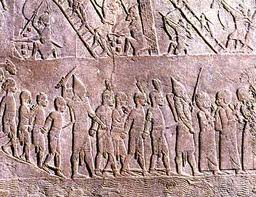
Assyrian siege ramp on the side of Lachish

Take your troubles to the Lord — When I read through the verses of the story of the heavily distressed Hezekiah laying before God the letter from Sennecarib, pleading for help, I can relate; can’t you? Have you ever been there? Sennecarib’s threat was not idle; Assyria had a cultivated reputation for brutality and cruelty that they seemed to revel in. Saying no to the Assyrians was asking for big, terrible trouble. But taking his troubles to the Lord was what worked! Hezekiah couldn’t defeat him, but God always can. Got troubles? Lay them out before the Lord; do what you need to do; and leave the rest to Him.

See you tomorrow, Lord willing.

Posted in Uncategorized | Leave a comment

The final end of the sins of Jeroboam — 2 Kings 14-16

the cruelty of the Assyrians

If you’ve already read today’s reading, you’ll know how fast the parade of kings is moving. Both Judah and Israel had kings that were less than completely faithful, but Israel had really gone off the rails and were about to pay the price. But first a little background on Assyrians.

The Assyrians were the Nazis of their day. The throne room of the king of Assyrian was found to have relief engravings on his walls that would make any Goth envious — skeletons, skulls, pictures of prisoners being impaled, cities being besieged and set afire, prisoners led away by meat hooks in their cheeks, beheadings, etc. All of it was designed to sent a shiver up the spine of any ambassador or visiting dignitary. Any cruelty either performed against a defeated enemy was gladly advertised or depicted on the king’s throne room walls, because it only added to the legend of Assyrian cruelty to the resistant. With a reputation like this, you could make any city you decided to fight think twice about resisting.

And these were the people that God sent against His own people, Israel. “The Lord GOD has sworn by His holiness, “Behold, the days are coming upon you When they will take you away with meat hooks, And the last of you with fish hooks.” Amos 4:2, NAS95.

Punishment comes to Israel — Since the time of Jeroboam the son of Nebat, the kings of Israel were said to not depart from the sins of Jeroboam — the changes made to the worship of God including idolatry, changes in the priesthood, changes in holy days, and changes in the place of worship. These changes had also eased Israel into the paganism of Baal, Ashteroth, and the Asherah. Jezebel had introduced official worship of Baal, witchcraft, and gross sexual immorality. Things had gone from bad to worse religiously. God had warned them from the time of Moses that unfaithfulness would bring them to ruin, it would provoke Him to eject them from the land He had given them. And the cruel Assyrians were to be God’s rod of punishment. Did God really do that? He did.

Would God do it again to unfaithful men? It would be a mistake to think He would not. He is God. He doesn’t change.

Deliberately using a losing strategy — Ahaz had a strange approach to victory, adopt the gods of the country he had defeated. Upon defeating Damascus he instructed Urijah the priest to make an altar after the fashion of the pagan altar he saw there.

As odd as this behavior seems, we still do many of the same things. People still adopt the practices of failed religious systems: reincarnation, universal salvation, images, moralities, worship practices, and more. I went to a Christian retreat not long ago in which the speakers were promoting some of the meditation practices of Hinduism and Buddhism — I enjoyed the fellowship. Why is it that God’s word, the Bible, is just not enough? I suppose for the same reason that the altar of Jerusalem wasn’t enough for Ahaz.

See you tomorrow, Lord willing.

Posted in Uncategorized | Leave a comment

Zeal Matters — 2 Kings 11-13

Have you been keeping track of the kings in your reading? In today’s scriptures we have a couple of kings named Jehoash, one ruled Judah and the other ruled Israel, reigning contemporaneously. And then we have another Jeroboam, not the son of Nebat (Jeroboam the son of Nebat is the one who changed the worship of Israel). A score card isn’t required, but it can be helpful. 🙂

God always finds a way — It is always helpful to my faith to be reminded again of 1) God’s providence and 2) the amazing continuance of the biblical storyline, despite Satan’s attempts stop it — in this case, an attempt to put an end to David’s line by Athalia, the queen-mother. How demonically power maniacal do you need to be to kill all your grandchildren to gain the throne? But God, through the sister of the dead king (Ahaziah), hid one of Ahaziah’s sons, an infant, Jehoash. When the priest Jehoiada, discovers it, he waits for the right time, organizes a coup against the usurper (Athalia, the queen-mother), and establishes the rule of the rightful king, Jehoash (also known as Joash). God found a way, His scheme of redemption was maintained, through an otherwise unknown aunt, Jehosheba. Have you ever wondered whether or not your life is making any difference in the larger picture? Here’s an example of how doing right made a big difference. Winning a soul for Christ; teaching a child in Bible school, serving food to a needy family, giving some a hug and some encouragement at the right time — sometimes those sorts of things can make a huge difference in the larger picture.

In the movie The Bucket List one of the characters lists on his list of things to do before he dies “Kiss the prettiest girl in the world”. The other main character asks him how he hoped to accomplish that one. “Volume,” was the reply, delivered with a grin. How can you hope to make a real difference through doing small deeds of kindness, being compassionate, or acting rightly? In the end, it all depends on the Lord, of course. But to increase your chances: Volume! 🙂

The importance of having the Testimony — When Jehoiada anointed and crowned the 7 year old Jehoash, he made sure to give “the testimony” (11:12). This was a requirement set down by God Himself: ““Now it shall come about when he sits on the throne of his kingdom, he shall write for himself a copy of this law on a scroll in the presence of the Levitical priests.” Deuteronomy 17:18, NAS95. Although it was true that Jehoiada was a prime reason for Jehoash being one of the better kings of Judah (12:2), having access to the testimony (the law) must have been quite important, too.

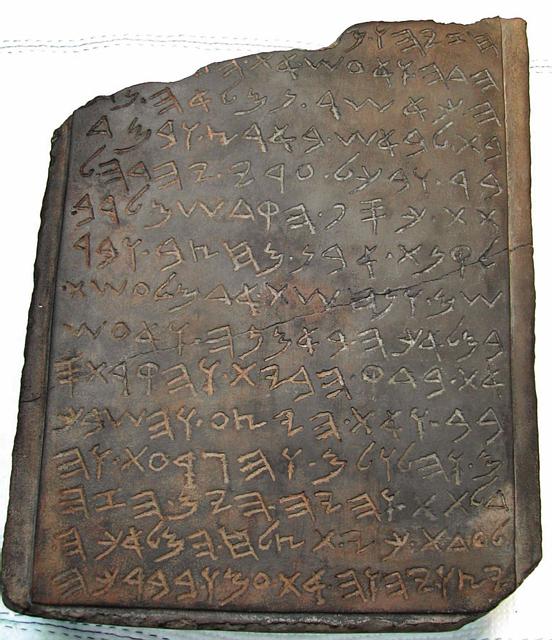
the Jehoash Inscriptrion

By the way, this is the same Jehoash whose inscription was found in 2003, which reads:

[I am Yeho’ash, son of
A]hazyahu, k[ing over Ju]dah,
and I executed the re[pai]rs.
When men’s hearts became
replete with generosity in
the (densely populated) land and in the (sparsely
populated) steppe, and in all the cities of Judah, to
donate money for the sacred
contributions abundantly,
in order to purchase quarry
stone and juniper wood and
Edomite copper/copper from (the city of) ’Adam,
(and) in order to perform
the work faithfully—
(Then) I renovated the
breach(es) of the Temple
and of the surrounding
walls, and the storied structure,
and the meshwork, and the winding stairs,
and the recesses, and the doors.
May (this inscribed stone) become this day
a witness that the work has succeeded,
(and) may God (thus) ordain his people with a
blessing.

This inscription, of course, corresponds with what we’ve read today in chapter 12.

Zeal matters — As Elisha is on his death bed, Jehoash of Israel comes in apparent fear and distress over Elisha’s impending death. And why not? Jehoash was losing his best intel source and connection to the Lord (see chapter 6). In response, Elisha tells Jehoram to take a bow and shoot it out the window toward the east, which he does. “Then he said, ‘Take the arrows,’ and he took them. And he said to the king of Israel, ‘Strike the ground,’ and he struck it three times and stopped.” 2 Kings 13:18, NAS95. Elisha was displeased, because had Jehoash struck the arrows 5 or 6 times (a little more zeal, please) Israel would have beaten back the Arameans permanently. As it was, they would only defeat them thrice. Had only Jehoash known that a little more zeal would’ve made a big difference, certainly he would have been more vigorous, perhaps beaten the ground 100 times. But he didn’t know. He just gave it a mediocre effort to what may have seemed like kind of a silly thing to be doing. So it is with us.

How we do even small things, things that we may think are unrelated to the big things, can make a big difference in ways we may not realize. Whether we are friendly or not to the store clerk may determine whether or not we’ll ever have the chance to share the Gospel with him or her. Whether we greet the visitor at church, may determine whether or not he comes back and finds salvation. Whether we demonstrate the right attitude toward the Bible or the church or the brethren, may help determine whether our children will be faithful once they’ve left home.

See you tomorrow, Lord willing.

Posted in Bible commentary, Christianity, Old Testament | Leave a comment

Evil is returned upon Ahab’s house — 2 Kings 8-10

Jezebel's signet ringJezebel’s signet ring

Today’s post covers a lot action — no less than three coups, assassinations, and a complete religious “cleansing”. But the points to consider here are actually few and pretty straight forward.

Those who corrupt God’s way don’t go unpunished — Ahab’s reign had been 22 years long, but his influence of religious corruption had been profound. He had built upon the foundation of the sins of Jeroboam and deepened the religious corruption by marrying a woman who was a positive evangelist for Baal. It was Ahab and his family that both Elijah and Elisha had struggled against. Pure belief in and worship of the true God had been marginalized and had withered away to near extinction. Elijah had prophesied a catastrophic and complete end to Ahab’s house (1 Kings 21:20-24), because “Surely there was no one like Ahab who sold himself to do evil in the sight of the LORD, because Jezebel his wife incited him. He acted very abominably in following idols, according to all that the Amorites had done, whom the LORD cast out before the sons of Israel.” 1 Kings 21:25, 26, NAS95. And through Jehu God made it happen — in spades. Consider:

  • “And Jehu drew his bow with his full strength and shot Joram between his arms; and the arrow went through his heart and he sank in his chariot.” 2 Kings 9:24, NAS95. And his body was thrown into Naboth’s field.
  • “When Ahaziah the king of Judah [and also the son-in-law of the house of Ahab — 2 Kings 8:26) saw this, he fled by the way of the garden house. And Jehu pursued him and said, ‘Shoot him too, in the chariot.’ So they shot him at the ascent of Gur, which is at Ibleam. But he fled to Megiddo and died there.” 2 Kings 9:27, NAS95.
  • “[Jehu] said, ‘Throw [Jezebel] down.” So they threw her down, and some of her blood was sprinkled on the wall and on the horses, and he trampled her under foot.” … “They went to bury her, but they found nothing more of her than the skull and the feet and the palms of her hands.” … “and the corpse of Jezebel will be as dung on the face of the field in the property of Jezreel, so they cannot say, ‘This is Jezebel.’” 2 Kings 9:33, 35, 37, NAS95.
  • “When the letter came to them, they took the king’s sons and slaughtered them, seventy persons, and put their heads in baskets, and sent them to him at Jezreel.” 2 Kings 10:7, NAS95.
  • “So Jehu killed all who remained of the house of Ahab in Jezreel, and all his great men and his acquaintances and his priests, until he left him without a survivor.” 2 Kings 10:11, NAS95.
  • “Then it came about, as soon as he had finished offering the burnt offering [to Baal], that Jehu said to the guard and to the royal officers, ‘Go in, kill [the worshippers of Baal]; let none come out.’ And they killed them with the edge of the sword; and the guard and the royal officers threw them out, and went to the inner room of the house of Baal.” 2 Kings 10:25, NAS95.

All this to remind us that God’s threats of punishment are never empty ones. God took Ahab’s sin — though I’m sure there were more, we’re only told of one “moral” sin; the rest were “religious” sins — quite seriously, and He punished them severely. Religious sins seemed to have been “salvation issues” in Ahab’s case. Can we expect that deliberate religious sins would be less so today?

Marry up, not down — Both Ahab and Ahaziah married pagan women. It’s very likely that both had political reasons for their choice of brides, but whatever political advantage may have been gained were completely overshadowed by the spiritual disadvantages. Marry “up”, someone who’ll lift you spiritually — not drag you down, tempt you to do things you shouldn’t, or pull your interests and priorities away from the Lord.

See you tomorrow, Lord willing.

Posted in Uncategorized | Leave a comment

Wash and be clean — 2 Kings 5-7

Although Elijah is considered the greatest of the prophets, Elisha clearly performed more miracles. Today’s reading is full of them: the cleansing of Naaman, the floating axehead, the capture of the Aramean army, the miraculous defeat of the Arameans, and miraculous provision of food for Samaria.

What we think God should do isn’t always what God does — The story of Naaman is a great story that has a lot of obvious parallels to New Testament baptism. One of those applications is found in Naaman’s initial reaction to Elisha’s message to dip seven times in the Jordan. “But Naaman was furious and went away and said, ‘Behold, I thought, ‘He will surely come out to me and stand and call on the name of the LORD his God, and wave his hand over the place and cure the leper.’” 2 Kings 5:11, NAS95. Naaman was expecting the usual medicine show theatrics of the prophets of his day. But the God of Israel and His prophets weren’t a medicine show. The popular wisdom and religion of our age says that it doesn’t matter what you believe as long you believe something. The one true and living God says something quite different: “Jesus *said to him, “I am the way, and the truth, and the life; no one comes to the Father but through Me.” John 14:6, NAS95. And the popular wisdom and religion of our day responds, “OK, believe in Jesus; say the ‘sinner’s prayer’ and you’re good to go.” But God’s word gives a different answer: “Peter said to them, ‘Repent, and each of you be baptized in the name of Jesus Christ for the forgiveness of your sins; and you will receive the gift of the Holy Spirit.’” Acts 2:38, NAS95. “Pretty much everyone’s going to Heaven,” says popular wisdom and religion. But the Jesus the Lord says, “Enter through the narrow gate; for the gate is wide and the way is broad that leads to destruction, and there are many who enter through it. For the gate is small and the way is narrow that leads to life, and there are few who find it.” Matthew 7:13, 14, NAS95. “God loves worship that includes instruments, dance, comedians, theater, and other performances.” The Lord’s New Testament calls for a pattern to worship. You see, there are popular expectations of what God should want, and then there’s what God wants. There are popular expectations of what God should do, and then there what God does. Naaman thought the prophet should come out and wave his hand over his leprous wound. God had different plans. Which one worked? You wouldn’t become “furious and [go] away and [saying], ‘Behold, I thought, ‘He will surely…”? Would you?

The water wasn’t curative, but faithful obedience was — As far as we know, no leper beside Naaman has ever been cured by the Jordan River. It has no special antibiotics, no special set of chemicals. There was nothing curative about the waters of the Jordan. It was Naaman’s faith, tentative as it was, expressed in obedience to the Lord, that moved God to perform the miraculous healing of Naaman. Likewise, baptism is not meritorious. There’s nothing about getting wet that earns salvation. Baptism is nothing but faith expressed in obedience to God’s command (Romans 1:5 / 16:26) that moves the Lord to forgive our sins (Acts 2:38), wash our sins away our sins (Acts 22:16), and save us (1 Peter 3:21).

Navigating religious minefields — After Naaman is cleansed he returned to Elisha in thanks. He said, “…Behold now, I know that there is no God in all the earth, but in Israel; so please take a present from your servant now.”” 2 Kings 5:15, NAS95. When Elisha refuses Naaman’s gifts (but Gehazi greedily accepted to his later regret), Naaman offers what God has always really wanted from any of us, his heart and loyalty. “… please let your servant at least be given two mules’ load of earth; for your servant will no longer offer burnt offering nor will he sacrifice to other gods, but to the LORD. In this matter may the LORD pardon your servant: when my master goes into the house of Rimmon to worship there, and he leans on my hand and I bow myself in the house of Rimmon, when I bow myself in the house of Rimmon, the LORD pardon your servant in this matter.” 2 Kings 5:18, NAS95. In the world we have to live in, we are sometimes put into religiously uncomfortable situations. Sometimes Christians in Corinth face such conflicts (see 1 Cor. 8-10). We can imagine that biblical heroes like Joseph and Daniel had to face similar circumstances. The keys to navigating these difficult situations seems to be 1) understanding that there is no other God than God — “Therefore concerning the eating of things sacrificed to idols, we know that there is no such thing as an idol in the world, and that there is no God but one” (1 Corinthians 8:4, NAS95) — and 2) refusing to offer worship or obedience to any one but the one true and living God. Relating to this latter point, Paul wrote, “What do I mean then? That a thing sacrificed to idols is anything, or that an idol is anything? No, but I say that the things which the Gentiles sacrifice, they sacrifice to demons and not to God; and I do not want you to become sharers in demons. You cannot drink the cup of the Lord and the cup of demons; you cannot partake of the table of the Lord and the table of demons. Or do we provoke the Lord to jealousy? We are not stronger than He, are we?” 1 Corinthians 10:19-22, NAS95. Do you need to go to a funeral in a different religious community? Don’t offer inappropriate worship, don’t confess another god, but don’t worry that you’ve been unfaithful to the Lord.

Open his eyes that he may see — I love this story (2 Kings 6): Elisha’s attendant (Gehazi?) gets up early one morning, he discovers that the Aramean army had surrounded Elisha’s home (to eliminate their intelligence leak, as it were). He rushes back in panic to tell Elisha, but Elisha confidently responds, “…’Do not fear, for those who are with us are more than those who are with them.’ Then Elisha prayed and said, ‘O LORD, I pray, open his eyes that he may see.’ And the LORD opened the servant’s eyes and he saw; and behold, the mountain was full of horses and chariots of fire all around Elisha.” 2 Kings 6:16, 17, NAS95. Do we panic at our circumstances, when we really just need to see God’s angels all around us? “Seeing” the unseen takes practice, it’s part of that “renewing of the mind” that Paul talks about, but it is well worth the cultivation.

The sin of keeping good news to yourself — The lepers in this story (chapter 7), being the outcasts of society, not even being able get the protection of the walls of the city, may have been tempted to let the people in the city just fend for themselves, while they feasted and reveled in the good fortune that had finally, at long last, come their way. But knowing how desperate things were within the wall of the besieged city, their consciences compelled them to share the good news, “Then they said to one another, ‘We are not doing right. This day is a day of good news, but we are keeping silent; if we wait until morning light, punishment will overtake us. Now therefore come, let us go and tell the king’s household.’” 2 Kings 7:9, NAS95. As a Christian, what good news do you have that a starving word needs to hear?

See you tomorrow, Lord willing.

Posted in Christianity, New Testament, Old Testament | Leave a comment